Manila, Philippines
info@sportstek.ph

Technology
TCL challenges the way we buy TVs: Are the specs telling the whole story?
FOR many consumers, buying a television starts with three familiar questions: How big is the screen, what is the resolution, and how much does it cost? After verifying those factors, many consumers let the brand name decide their purchase.
But as display technology becomes more advanced, those numbers may no longer tell the complete story. TCL Philippines is challenging consumers to look beyond the most visible specifications and understand what really contributes to picture quality.
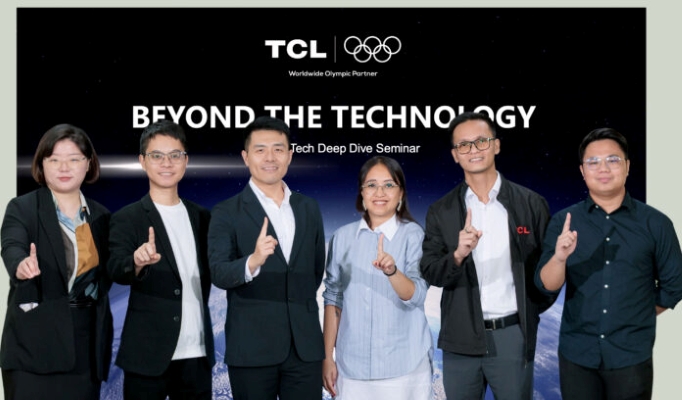
At its recent TCL SQD Mini LED Media Roundtable, the company put the focus on the technology working behind the screen, using its new C7L television as a proof point. The discussion explored how panel technology, backlighting, local dimming, brightness, color, and image processing work together to shape what viewers see. A side-by-side picture comparison during the roundtable highlighted why televisions with similar headline specifications can still deliver different viewing experiences.
Screen size and resolution remain important when choosing a TV. A larger display can make movies, sports and games more immersive, while 4K resolution provides greater detail than lower-resolution formats. But these specifications only describe part of the viewing experience. Two televisions with the same screen size and 4K resolution can still look noticeably different.
Much of that difference starts with the panel itself. The panel influences characteristics such as contrast, color and viewing performance, making it an important part of the overall display system. TCL’s C7L uses a high-contrast CSOT HVA 2.0 panel, paired with SQD Mini LED technology and an Ultra Colour Filter Panel. It is a combination that shows why consumers should look beyond resolution alone.
What happens behind the panel is equally important. Mini LED uses smaller light-emitting elements than conventional LED backlighting, allowing more light sources to be placed across the display and controlled with greater precision. The side-by-side comparison at the roundtable also made clear that having Mini LED technology does not automatically mean every television will produce the same results. TCL’s SQD Mini LED showed how more precise control of the backlight can make a difference in managing light, contrast and detail across the screen.
Disassembled TV units on display gave a close-up look at TCL’s SQD Mini LED, QD Mini LED, and QLED engineering, alongside another TV brand’s Mini LED model, offering a closer look at how different implementations of Mini LED technology can vary in design, precision, and performance. The last TV from the right is other brand’s TV Mini LED.
That control becomes especially important in scenes containing both bright and dark areas. Local dimming allows different sections of the backlight to be adjusted independently, helping maintain darker areas while preserving brighter highlights. TCL says the C7L combines its Mini LED system with all-domain halo control, powerful light-emitting chips and micro-lenses designed to reduce distracting light bleed. The company also says its high-efficiency light chip is designed to increase peak brightness while improving energy efficiency.
Colour is another part of the equation. A high-resolution panel can reproduce plenty of detail, but convincing color is what helps an image feel more natural and lifelike. TCL combines its Super QLED technology with an Ultra Colour Filter Panel as part of the C7L’s SQD Mini LED system, aiming to deliver richer color reproduction. It is another reminder that picture quality comes from several technologies working together.
Some of the most important work happens where viewers cannot see it. Image processing helps a television interpret incoming content and manage elements such as color, contrast, sharpness and motion. This matters because not everything people watch is native 4K or produced under ideal conditions. A good display therefore needs more than a high pixel count; it also needs to process content effectively.
The benefits extend beyond movies and streaming. TCL says the C7L’s SQD Mini LED system can help gamers see details in darker scenes while maintaining vibrant colors and bright areas. That can be useful in games where important information is hidden in shadows or where scenes shift quickly between dark and bright environments. Here, picture quality becomes about visibility and consistency as much as visual impact.
TCL’s latest SQD Mini LED technology, pitted here against QD Mini LED, shows off its deeper contrast and sharper detail, underscoring how TCL aims to defend its No. 1 position in the TV category.
For TCL, SQD Mini LED represents its next generation of premium display technology. The company says the platform combines precise Mini LED backlighting with its Super QLED technology and Ultra Colour Filter Panel. Its TCL X11L, described by the company as the world’s first SQD Mini LED flagship television, received the Innovative Display Technology Gold Award at the Global Top Brands Awards during CES 2026. The new C7L brings the technology into the Philippine market in 55-, 65-, 75- and 85-inch models through authorized TCL dealers nationwide.
For consumers, the bigger takeaway is that a television’s technology should be judged by what it delivers on screen, not simply by the specifications printed on the box. The term “Mini LED” can cover different implementations, so shoppers should look at how well a TV handles contrast, brightness, color and detail rather than relying on the label alone. Screen size and resolution remain important, but they are only part of the equation when choosing a television. Ultimately, understanding the technology behind the display can help consumers make a more informed choice and find a TV that delivers the viewing experience they are actually looking for.