Manila, Philippines
info@sportstek.ph

Technology
Thailand Herbs to the World: Inside the Science Driving ASEAN’s Natural Products Industry
By Edwin Rollon
SAMUT PRAKAN, THAILAND — From traditional herbal remedies to sophisticated botanical extracts, Thailand is seeking to turn its rich natural resources into high-value ingredients for the global pharmaceutical, nutraceutical, functional food, and cosmetics industries.
At the center of that push is Specialty Natural Products Public Company Limited (SNPS) and its subsidiary, Specialty Innovation Co., Ltd. (SI), which are leveraging more than 25 years of experience in herbs, botanical extraction, research, and product development.
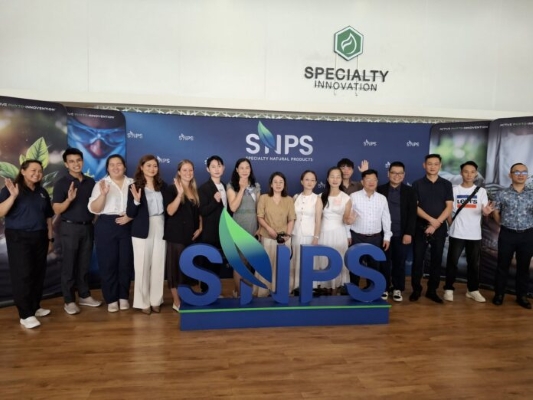
The companies recently opened their laboratories and manufacturing facilities in Samut Prakan to members of the regional media, including a nine-member Philippine delegation, as part of activities surrounding Vitafoods Asia 2026.
The media tour offered a glimpse into the transformation of Thailand's traditional botanical resources into standardized, quality-controlled natural ingredients for global markets, driven by science, technology, and manufacturing.
Inside the laboratories, journalists witnessed the research, analytical testing, and product-development processes involved in converting botanical materials into science-backed ingredients.
At the manufacturing facilities, the group observed how the team scales up these innovations for commercial production while maintaining quality, consistency, and traceability.
SNPS anchors its journey on the 4Cs philosophy: Cultivation, Creation, Conversion, and Contribution.
It begins with cultivating valuable herbs, followed by creating innovative extracts, converting them into high-quality ingredients and ultimately contributing to healthier lives.
Moving Beyond Raw Materials
For SNPS Chief Executive Officer Dr. Theeraya Krisdaphong, the bigger opportunity for Thailand and the rest of ASEAN is to move beyond exporting raw agricultural materials and capture more value through processing, standardization, formulation, and manufacturing.
“A country that exports dried plant material and imports finished ingredients has agreed to keep the smallest slice of its own value,” Theeraya said.
“Everything that makes an ingredient valuable — the standardization, the analytics, the safety file, the formulation — happens after the farm gate. That is the part we built here. That is the part ASEAN can build together.”
Theeraya believes ASEAN has a natural advantage that goes beyond labor costs: biodiversity.
The region is home to nearly 700 million people and produces an extraordinary variety of tropical plants and herbs, including butterfly pea, turmeric, annatto, gardenia, roselle, pandan and sappan.
Although Thailand, Indonesia, Vietnam, the Philippines, and Malaysia each have distinct strengths in botanical production, the region still exports much of its natural resources as raw or minimally processed materials.
The challenge, according to SNPS, is building the infrastructure and scientific capabilities that allow ASEAN countries to capture greater value from their own natural resources.
That means developing standardized specifications, validated analytical methods, safety documentation, and advanced extraction technologies capable of delivering consistent active ingredients from batch to batch and harvest to harvest.
Natural Colors: A Growing Opportunity
One of the areas where this challenge — and opportunity — is particularly evident is in natural food and product coloring.
As global brands increasingly reformulate products and move away from synthetic colors, demand for natural alternatives continues to grow. But natural colors present technical challenges that synthetic dyes often avoid.
Heat, light, pH and storage conditions can affect natural pigments, while their characteristics may also vary depending on the source and harvest.
For manufacturers, producing a natural color that remains stable and consistent at commercial scale requires considerably more than simply drying and processing a plant.
That is where technology and scientific expertise become critical.
The company also presented its BIOCPX platform, which integrates multiple active ingredients through a molecular extraction process, and its cultivation program involving Thai farming networks designed to establish traceability from the beginning of the supply chain.
The group also saw the quality systems supporting the company’s operations, including an ISO 17025 laboratory and certifications covering GMP, PIC/S GMP, HACCP, ISO 9001, Halal, ECOCERT COSMOS Organic and EU Organic standards.
The manufacturing facility is also LEED-certified, reflecting the company’s focus on sustainable production.
Building an ASEAN Natural Products Ecosystem
The message from SNPS was clear: ASEAN has the plants, the biodiversity and the agricultural capability. The next step is to strengthen the scientific and industrial infrastructure needed to turn those resources into globally competitive ingredients.
Rather than competing individually for the same international markets, Theeraya sees an opportunity for ASEAN countries to build a stronger regional ecosystem.
“We would rather share a large regional plate than defend a small national one,” he said.
“Bring us the plant that grows in your country. We will bring standardization, analytics and the factory. The market we are trying to win is not in Bangkok or Jakarta or Manila. It is in Europe, the United States and Japan, and no single ASEAN country wins it alone.”
Vitafoods Asia Opens the Door
Organizers arranged the media visit in connection with Vitafoods Asia 2026, which brings together companies, manufacturers, suppliers, and industry professionals from across the global nutraceutical and natural products sector.
SNPS and SI expressed their appreciation to Informa Markets and the Vitafoods Asia team for creating a platform that connects ASEAN manufacturers with international markets and media.
Informa Markets Regional Portfolio Director-ASEAN Rungphech “Rose” Chitanuwat also thanked SNPS officials and executives for participating in Vitafoods Asia 2026 and opening its facilities to the regional media.
“We’re very thankful to SNPS for this opportunity. It’s really an honor collaborating with an institution in herbal innovation,” Chitanuwat said.
She added that Vitafoods Asia provides an important platform for strengthening the herbal and natural products industry not only in the region but also in the global market.
For Theeraya, the exhibition is more than a showcase of products. It represents an opportunity for ASEAN companies to collaborate, share capabilities, and compete together in the global natural products industry.
The story of Thailand’s herbs, therefore, is no longer simply about farming and traditional knowledge.
It is increasingly about science, technology, standardization, manufacturing and global market access.
And as SNPS puts it, the journey from Cultivation to Creation, Conversion and Contribution could become a blueprint for how ASEAN transforms its natural wealth into lasting economic value — and brings the region’s botanical treasures to the world.